
IT Compliance Explained Simply - guidelines, software and management
What is IT Compliance?
The term IT compliance describes adherence to all legal, regulatory and internal company requirements in the area of information technology. The aim is to ensure that IT systems, digital processes and the handling of sensitive data are legally compliant, secure and traceable.
IT compliance is not an isolated area of responsibility for the IT department, but a holistic management principle. It affects central corporate functions such as data protection, contract management, information security, access management, archiving and risk management - areas that are becoming particularly important in the course of digital transformation.
IT compliance guidelines and their implementation
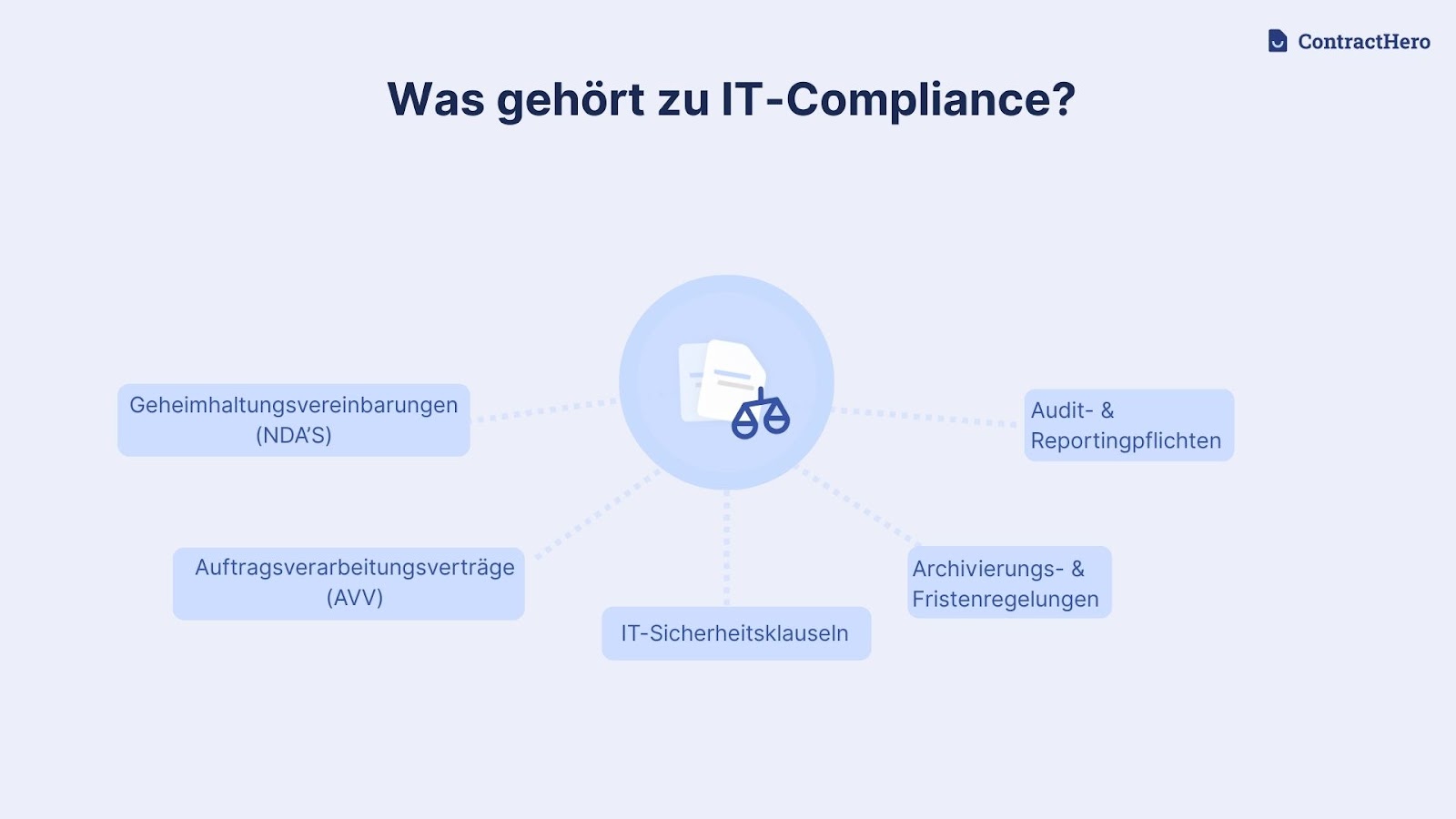
IT compliance is based on requirements such as GDPR, ISO 27001, GoBD or industry-specific standards. These require traceable data processing, secure authentication, access protection, processing documentation and audit-proof archiving. Contracts with service providers and clear regulations on archiving and deadline control form a central foundation. Digital contract management helps with technical and organizational implementation.
Is IT compliance required by law?
In times of digital processes, cloud infrastructures and networked systems, IT compliance is no longer just an operational tool, but a mandatory and essential part of corporate management. Any violation of legal regulations - e.g. due to unsecured databases, faulty access concepts or outdated contractual clauses - can have legal, financial and reputational consequences.
Studies show*:
- 87% of companies report negative effects of poor compliance
- 91% plan to expand their measures in the next five years
*Note: The figures quoted are based on standard industry studies, e.g. by Bitkom and PwC.
IT compliance is therefore not a nice-to-have - but a corporate duty that ensures security, reliability and legal compliance in the digital age.
Compliance management: tasks and objectives
Compliance management encompasses all organizational measures that ensure compliance with laws, standards and internal regulations. This includes, among other things:
- Development and maintenance of a compliance management system (CMS)
- Risk analyses and internal control mechanisms
- Employee training and awareness measures
- Monitoring and documentation of processes
- Reporting to the Executive Board
The goal: legal compliance, transparency and lasting trust, both internally and externally.
What is a Compliance Officer?
A compliance officer is responsible for implementing and monitoring the compliance strategy. His or her tasks include Risk analysis, advising the specialist departments, developing guidelines, training and reporting to the management. He is the central point of contact for all compliance issues.
Violations of compliance guidelines - causes and consequences
Anyone who does not have their contract processes under control - for example, does not define clear responsibilities, loses sight of deadlines or files contracts in an unstructured manner - risks data protection breaches, unclear responsibilities and therefore non-compliance.
1. Fines and legal consequences
According to Article 83, a breach of the General Data Protection Regulation (GDPR) can cost companies up to €20 million or 4% of their global annual turnover - whichever is higher.
2. Reputational damage
Misconduct relating to data leaks or questionable IT practices spreads quickly - and has a negative impact on trust, customer loyalty and market value.
3. Economic disadvantages
Non-compliance can lead to the termination of contracts, rejection in tenders or exclusion from certain partnerships - with a direct impact on sales.
What are typical compliance violations?
Violations of IT compliance guidelines occur more frequently than you might think and range from everyday carelessness to serious offenses. A few examples:
- Data breaches - e.g. unsecured storage of personal data
- Lack of access controls - employees have access to contracts even though they are not authorized to do so
- Contractual clauses that have not been updated - for example in the event of changes to the law
- Lack of traceability - no audit trails, unclear version history
All of these violations can result in legal sanctions - from warnings and fines to contract terminations.
What does contract compliance mean?
Contract compliance means adherence to all contractually agreed conditions - both by the company itself and by external partners. This includes adherence to deadlines, data protection obligations and scope of services. Digital contract software can automatically detect deviations and inform those responsible at an early stage.
How to sensitize employees to compliance
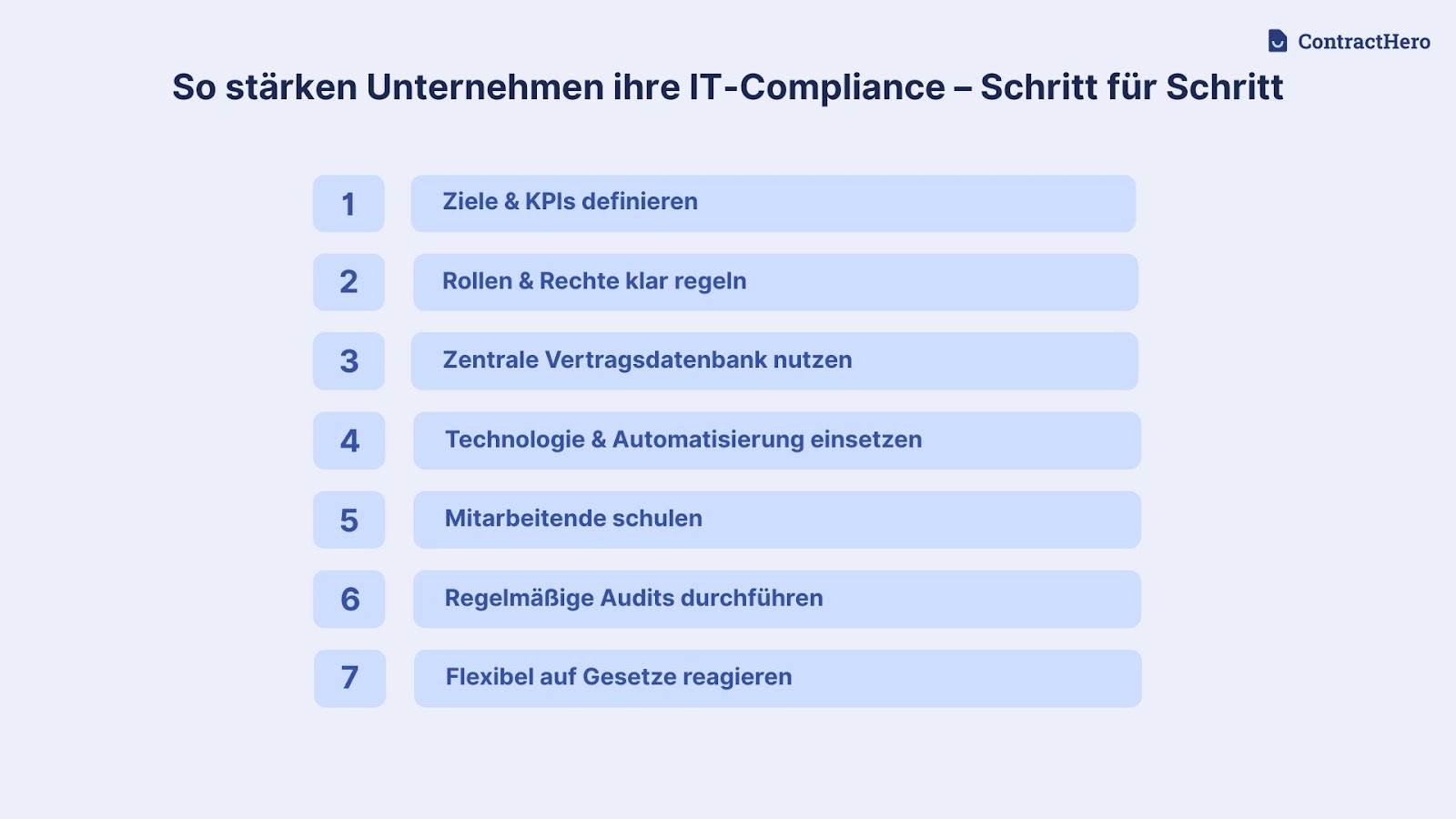
Sustainable IT compliance management relies on processes, responsibilities and, above all, tools. Here are some best practices:
1. Clear objectives & KPIs
Only those who have measurable goals - e.g. meeting deadlines, audit quota or access hits - can improve their compliance.
2. Role and rights management
Unclear access rights harbor enormous risks. Tools such as ContractHero make it possible to define read and write permissions at contract level - individually and audit-proof.
3. Central contract database
A structured database creates an overview, enables deadlines to be monitored and protects against data loss - especially when employees change.
4. Automation & use of technology
OCR text recognition, automatic deadline warnings and contract scoring reduce errors and significantly increase compliance quality.
5. Training & sensitization
Compliance only works if employees know how and why they should implement it. Training and checklists are essential here.
6. Internal & external audits
Regular audits uncover gaps in contract documentation, access management or compliance with legal requirements and prove conformity to business partners or authorities.
7. Responsiveness to changes in the law
Agile contract management ensures that new requirements are implemented quickly - including digital signatures and automated workflows.
Tools to support IT compliance
Modern contract management software forms the basis for IT compliance in practice - e.g. through:
- ISO 27001-certified data storage
- Role-based rights management
- Automated deadline detection and reminders
- Digital signatures
- Audit logs & documentation
- Multi-client capability for larger corporate groups
The result: fewer risks, less manual effort - and a reliable system for adhering to all relevant compliance requirements.
Conclusion
IT compliance is more than just IT security - it affects all digital processes in the company. Those who approach it strategically not only protect sensitive data, but also strengthen trust, minimize risks and ensure the long-term success of the company.
With the right structure, clear responsibilities and a digital solution like ContractHero, IT compliance goes from being a mandatory program to a competitive advantage.



_BestSupport_QualityOfSupport%20(5).png)