
Every contract has at least two contracting parties, whether it is a sales contract, a lease agreement, or a framework agreement with a supplier. Who these parties are in each specific case determines who is obligated to perform, who can assert claims, and to whom a notice of termination must be addressed. This glossary entry explains what constitutes a contracting party, how it differs from a party to the contract, and what companies should keep in mind when dealing with their contracting parties.
What does "contracting party" mean?
A contracting party is a natural person or legal entity that enters into a contract and thereby acquires rights and obligations under that contract. Contracting parties may be private individuals, companies such as a GmbH or AG, partnerships with legal capacity, associations, or public entities. A contract is formed through two matching declarations of intent—that is, through an offer and acceptance. Upon the conclusion of the contract, rights and obligations arise between the parties, which they can enforce against one another.
Who the contracting party is therefore does not depend on who negotiates or signs, but rather on who is legally bound by the agreement. If a managing director or an authorized employee signs on behalf of the company, the declaration has direct legal effect for and against the company pursuant to Section 164 of the German Civil Code (BGB). In this case, the contracting party is the company, not the person who signed. A separate article explains what matters when it comes to signing on behalf of a company. In corporate groups, it is also worth taking a closer look at which group company is actually entering into the contract.
For example, if the purchasing manager of Muster GmbH, acting with the appropriate power of attorney, signs a framework agreement with a supplier, Muster GmbH is the contracting party, and claims arising from the contract are directed against the company, not against the purchasing manager personally.
In everyday business, the term is usually used from one’s own perspective: “Our contractual partner” refers to the other party to the contract. Common synonyms include “contracting party” and, in legal terminology, “counterparty” or simply “the other side.”
What is the difference between a contracting partner and a contracting party?
In terms of meaning, there is no difference between “contracting party” and “party to the contract.” Both terms refer to the individuals or companies that enter into a contract and derive rights and obligations from it. The difference lies in linguistic usage. “Party to the contract” is the more neutral, legal term, which is also used in legislation, such as in Section 305 of the German Civil Code (BGB) regarding general terms and conditions. “Contracting party” is more common in business and emphasizes the relationship with the other side. The plural “contracting parties” refers to all parties involved in a contract. Partnership or consortium agreements often have more than two contracting parties.
A contracting party does not have to consist of a single person. If two people rent an apartment together, they collectively constitute the tenant. Conversely, not everyone who benefits from a contract is also a contracting party. In the case of a contract for the benefit of a third party under Section 328 of the German Civil Code (BGB), a third party acquires its own right to the performance without becoming a contracting party itself.
Contracting Parties in Various Types of Contracts
The role of a contracting party is defined by the term itself, but the obligations depend on the type of contract. However, the names of the contracting parties and the obligations they assume depend on the type of contract. For many typical contracts, the German Civil Code (BGB) specifies the main obligations: for sales contracts in § 433 BGB, for lease agreements in § 535 BGB, for service contracts in § 611 BGB, and for contracts for work and services in § 631 BGB. For other contracts, special laws determine who can be a contracting party, such as in the case of collective bargaining agreements and company agreements under labor law.
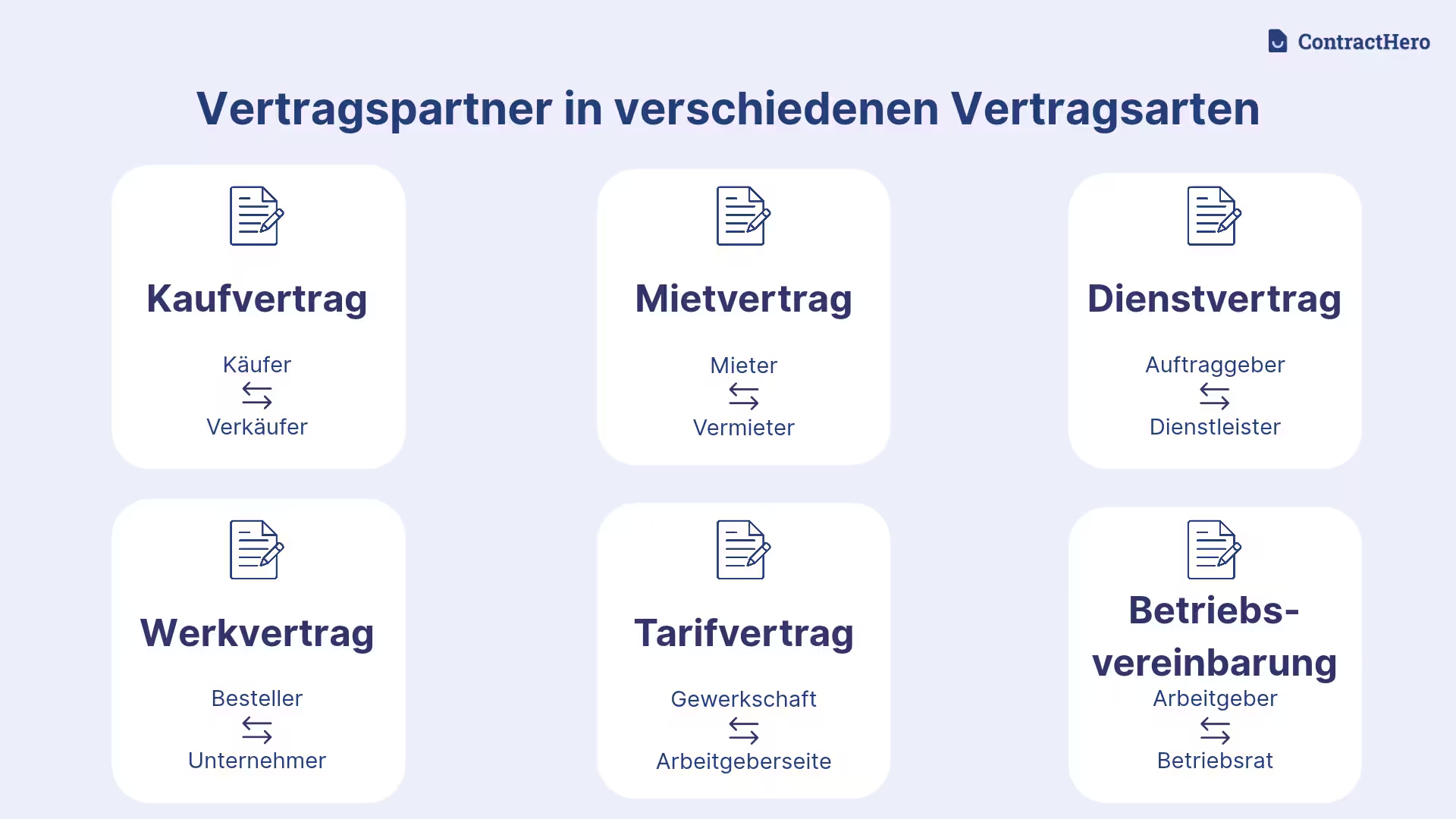
In companies, all of these types of contracts usually coexist. The purchasing department enters into supply contracts, the human resources department negotiates with the works council, and the finance department is responsible for rental and lease agreements. Each contractual relationship involves its own points of contact, deadlines, and obligations. Clearly identifying which contracting party is associated with which contract lays the foundation for reliable contract management. The following sections outline who the contracting parties are for the most important types of contracts.
Contracting Parties in Sales Contracts
In a sales contract, the buyer and seller are the contracting parties. The seller agrees to deliver the item to the buyer free of material defects and defects of title and to transfer ownership of the item to the buyer. In return, the buyer agrees to pay the agreed-upon purchase price and to accept the item. If the goods are defective, warranty claims—such as subsequent performance, reduction in price, or rescission—are directed against the seller as the contracting party. The manufacturer is only liable if it has provided a warranty itself.
In day-to-day business operations, sales contracts are often embedded in framework agreements, on the basis of which individual purchase orders are placed. Furthermore, special provisions of the German Commercial Code (HGB) apply between merchants, such as the obligation to inspect goods immediately and give notice of defects pursuant to Section 377 HGB. Clear documentation specifying which contract exists with which supplier is essential here for asserting claims in a timely manner.
This classification is particularly important for companies because it is the only way to clearly determine with whom the contract was entered into.
Contracting Parties in Lease Agreements
In a lease agreement, the landlord and the tenant are the contracting parties. The landlord provides the leased property in a condition consistent with the terms of the lease and maintains it in that condition throughout the lease term. The tenant pays the agreed-upon rent and treats the leased property with care. If several people rent the property together, they are all contracting parties and, as a rule, must also terminate the lease jointly or be terminated jointly.
For businesses, the primary focus is on commercial leases for offices, warehouses, or production facilities. These differ from residential lease law in key respects, such as notice periods and protection against termination. It is also important to note that a change in ownership does not terminate the lease. According to the principle that “a sale does not terminate a lease” (Section 566 of the German Civil Code (BGB)), the new owner steps into the existing contract as the landlord. Thus, while the contracting party changes, the contract itself remains in effect.
Contracting Parties in Service and Work Contracts
In an employment contract and a contract for services, the client and the contractor are generally the contracting parties. The law refers to the “employer” and the “employee” in an employment contract, and to the “purchaser” and the “contractor” in a contract for services. The key difference lies in the result to be delivered. In a service contract, the contractor is obligated to perform a service, such as consulting or IT support. In a contract for work and materials, the contractor is obligated to deliver a specific result, such as fully programmed software or a completed renovation.
This classification has practical implications for both contracting parties, for example, regarding acceptance, warranty, and termination. An employment contract is also a special type of service contract (Section 611a of the German Civil Code (BGB)) with the employer and employee as the contracting parties. Other typical service contracts within a company include consulting, maintenance, and freelance contracts. It is therefore important to clearly specify who the contracting parties are in a service contract, as well as the scope of services, the term, and the designated contact persons.
Contracting Parties in Collective Bargaining Agreements and Company Agreements
Section 2 of the Collective Bargaining Act (TVG) defines who the parties to a collective bargaining agreement are—that is, who may be a contracting party to such an agreement. The parties to a collective bargaining agreement are labor unions, individual employers, and employers’ associations. If a labor union enters into an agreement with an employers’ association, the result is an association-wide or regional collective bargaining agreement. If a union concludes an agreement with a single company, it is referred to as a company-level or in-house collective bargaining agreement. Under certain conditions, umbrella organizations may also conclude collective bargaining agreements. Individual employees, however, are not parties to the collective bargaining agreement, even if its provisions apply to their employment relationship. For more information, see the glossary entry on the framework collective bargaining agreement.
The Works Constitution Act provides a clear answer to the question of who the contracting parties are in a works agreement. They are the employer and the works council. According to Section 77(2) of the Works Constitution Act (BetrVG), both parties jointly adopt the works agreement, set it forth in writing, and sign it. If it is concluded in electronic form, the employer and the works council must electronically sign the same document.
Contracting Parties in Digital Contractual Relationships
Even in digital contractual relationships, the contracting party is the person or organization that is granted rights and imposed obligations under the contract. A “digital contracting party” is therefore not a separate legal status. What has changed most significantly is the process of concluding a contract. Offers are accepted via email, contracts are concluded through platforms, and they are signed with a digital signature. For most business contracts, the law does not prescribe a specific form. Where the written form is required by law, it may, in principle, be replaced by a qualified electronic signature pursuant to Section 126a of the German Civil Code (BGB).
The real challenge lies in ensuring unambiguous attribution. It must be clear who accepted the contract and whether that person was authorized to act on behalf of the company. Companies should therefore maintain a digitally traceable record of which company the contract is with, who signed on its behalf, and where the signed document is stored.
Obligations and Rights of the Contracting Parties
The obligations of the contracting parties arise primarily from the contract itself and, to a lesser extent, from the law. Legally, a distinction is made between primary obligations and ancillary obligations. Primary obligations define the contract. In a sales contract, these are delivery and payment; in a service contract, they are performance and compensation. Accessory obligations ensure proper performance. These include, for example, obligations to provide information and to cooperate, or the duty of confidentiality, which is often set forth in a separate confidentiality agreement. Furthermore, Section 241(2) of the German Civil Code (BGB) requires each contracting party to respect the rights, legal interests, and interests of the other party.
Every obligation on one side is matched by a right on the other. A party who performs a service may demand the agreed-upon consideration. In reciprocal contracts, a contracting party may generally withhold its own performance as long as the other party fails to perform (Section 320 of the German Civil Code (BGB)), unless it is obligated to perform first.
For companies, this means that contractual obligations and deadlines should not only be known but also clearly assigned internally. Only when it is clear who is responsible for which contractual relationship can a company reliably fulfill its own obligations and consistently enforce its claims against contractual partners.
Consequences of Breaches of Duty
If a contracting party fails to fulfill its obligations, fulfills them late, or does not fulfill them as required, this constitutes a breach of duty by that contracting party. The primary legal basis for a claim is Section 280(1) of the German Civil Code (BGB). The affected party may demand compensation for the resulting damages, unless the other contracting party is not at fault for the breach of duty. In the case of reciprocal contracts, withdrawal is also possible under Section 323 of the German Civil Code (BGB); however, this is generally only permitted after a reasonable period for performance or subsequent performance has expired without success. In the case of continuing obligations, termination for good cause may be considered.
Many contracts also specify the consequences themselves, such as through contractual penalties, lump-sum damages, or service levels with credit notes. Within a company, a breach of contract is usually felt at the operational level as well: deliveries are delayed, projects stall, and the effort required for coordination increases. The guide on breach of contract describes how companies can proceed in such cases.
General and Pre-Formulated Contract Terms
Contract terms are all provisions that define the content of a contract, ranging from performance and price to term and termination, as well as liability and jurisdiction. They may be individually negotiated between the contracting parties or pre-formulated by one party. General contract terms, also known as pre-formulated contract terms, are referred to in law as General Terms and Conditions (GTC). The definition of pre-formulated contractual terms is set forth in Section 305(1) of the German Civil Code (BGB). General Terms and Conditions (AGB) are all pre-formulated contractual terms intended for a large number of contracts that one contracting party (the user) presents to the other upon conclusion of a contract. It does not matter whether they appear in a separate document or within the text of the contract itself. There are no General Terms and Conditions if the clauses have been negotiated on a case-by-case basis. Well-known examples include terms and conditions of purchase and sale or the VOB/B, the “General Contract Conditions for the Execution of Construction Work.”
With respect to consumers, general terms and conditions become part of the contract only if the user expressly draws attention to them, the contracting party is able to become aware of their content in a reasonable manner, and agrees to their applicability. Between businesses, these requirements under Section 310(1) of the German Civil Code (BGB) do not apply. In such cases, an agreement on their inclusion—which may also be implied—is generally sufficient. In both cases, the following applies: Individual agreements take precedence (Section 305b of the German Civil Code (BGB)), surprising clauses do not become part of the contract (Section 305c BGB), and clauses that unreasonably disadvantage the other party are invalid (Section 307 BGB). If both parties refer to their own, conflicting general terms and conditions, the conflicting clauses generally do not apply. They are replaced by the statutory provisions (Section 306(2) of the German Civil Code (BGB)). It is therefore worthwhile for companies to keep general terms and conditions in mind not only when drafting contracts but also when reviewing and managing existing contracts.
Terminating a Contractual Partner: Procedure and Deadlines
Anyone wishing to terminate a contract with a contracting party should first review the contract itself. The procedure and deadlines depend on what was agreed upon and which legal provisions apply to the specific type of contract. Three factors are particularly important: the notice period and the termination date, any automatic renewal, and the agreed-upon form of notice, such as in writing or in text form.
A basic distinction is made between ordinary and extraordinary termination. Ordinary termination ends the contract in accordance with the agreed-upon or statutory notice period. Under Section 314 of the German Civil Code (BGB), either party to a continuing contractual relationship may also terminate the contract for good cause without notice if it would be unreasonable to expect the party to continue the contract. If the good cause stems from a breach of duty, a written warning or a deadline for remedying the breach is generally required first. Furthermore, the termination must be declared within a reasonable period after the grounds for termination became known.
A notice of termination does not take effect until it is received by the other party to the contract. Anyone wishing to terminate the contract within the required notice period should therefore choose a method of delivery that provides proof of receipt, allow for a sufficient time buffer, and ensure that an authorized representative signs for it.
Termination Notice to a Contractual Partner: Template and Required Information
A termination letter to a contractual partner should include at least the following information. These points also form the basic framework for any termination template:
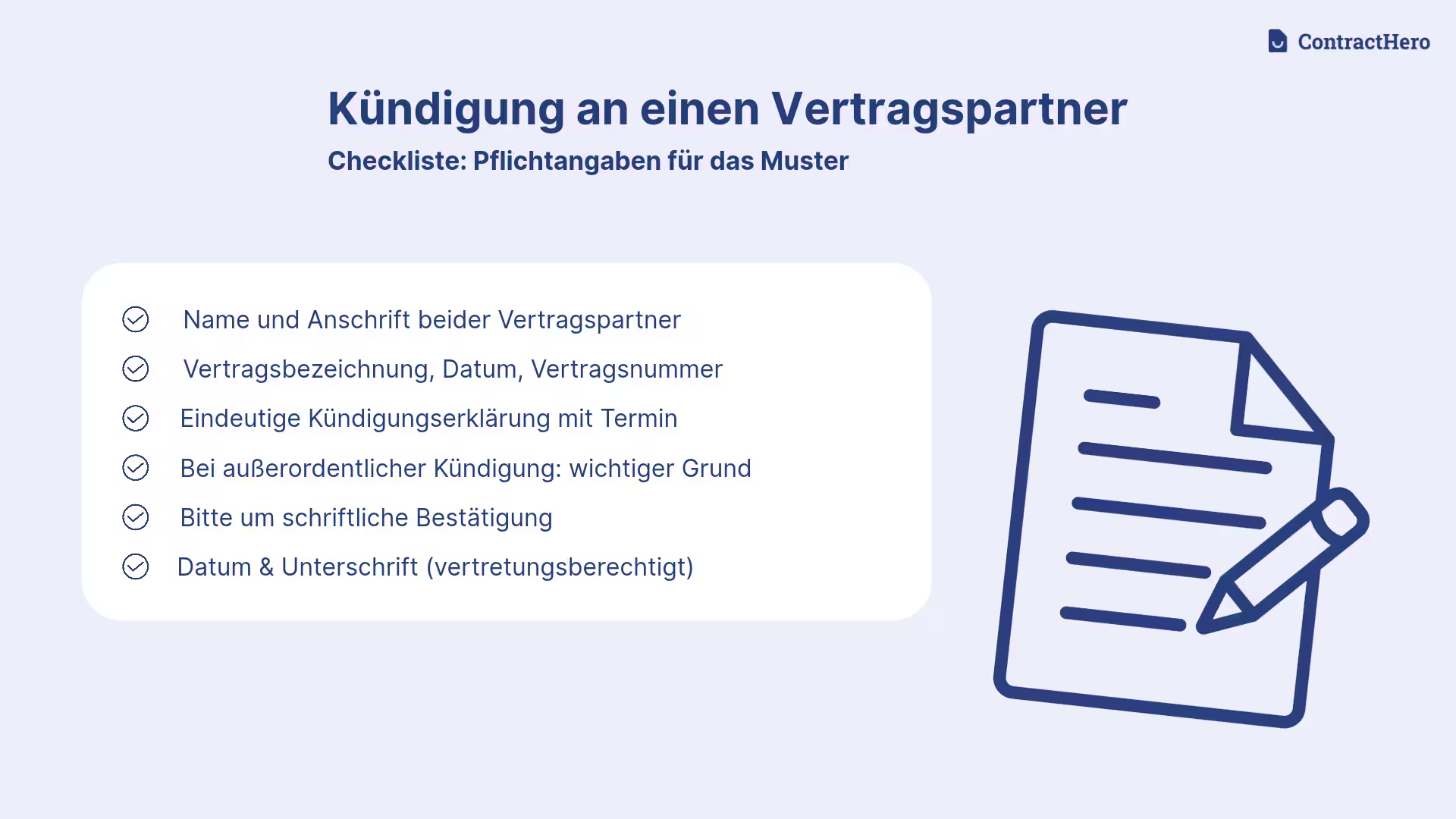
One possible wording is: “We hereby terminate the [Contract Name], Contract Number [Number], entered into between [Company A] and [Company B] on [Date], effective as of [Date], or, alternatively, at the earliest possible date. Please confirm receipt of this notice of termination and the termination date in writing.”
Real-world examples of contracting parties
The designations of the contracting parties depend on the type of contract. The following overview shows typical scenarios from everyday business life.
A typical medium-sized logistics company illustrates just how quickly the number of contractual partners can add up. It rents several warehouse locations, has framework agreements with fuel and spare parts suppliers, leases its vehicle fleet, contracts repair shops for maintenance, and uses various software solutions. Added to this are insurance policies, a collective bargaining agreement, and several company agreements. Often, there are multiple contracts with individual suppliers. A separate article illustrates the contractual risks that can arise if these relationships are not properly documented.
Conclusion: Keep a close eye on your business partners
Contracting parties are the individuals and companies that are granted rights and imposed obligations under a contract. Whether buyers and sellers, tenants and landlords, or employers and works councils: Who qualifies as a contracting party determines who is obligated to perform which services, against whom claims may be asserted, and to whom a notice of termination must be addressed. The decisive factor is always who is legally bound by the contract, not who negotiated or signed it.
As the number of contracts grows, managing them becomes an organizational challenge. When contracts are scattered across folders, mailboxes, and departments, it’s often unclear how many contracts exist with a supplier, what terms apply, and when the next notice period ends. This is exactly where ContractHero comes in. In the contact database, contracting parties can be created centrally and linked directly to their contracts—even if multiple parties are listed on a single contract page. Contact types such as supplier, customer, or service provider ensure consistent master data, and AI analysis can extract information about the contracting party directly from the contract document. Combined with deadline management and automatic reminders, this allows finance and legal departments to maintain a clear overview of all contractual relationships. Learn more about how structured contract management works in the glossary entry of the same name.



_BestSupport_QualityOfSupport%20(5).png)